

When you’re managing a construction project in California, safe and efficient access between levels isn’t just a convenience—it’s a legal requirement. Whether you’re working on a multi-story commercial building, a residential development, or an infrastructure project, adjustable temporary stairs construction CA offers the ideal solution for keeping your crew safe, your project on schedule, and your site fully compliant with California’s rigorous safety regulations.
At GPS Fabrication, we specialize in delivering high-quality adjustable temporary stair systems tailored to the unique demands of California construction sites. This comprehensive guide covers everything you need to know about adjustable temporary stairs—from Cal/OSHA requirements to the benefits of choosing a fabricated solution over makeshift alternatives.
What Are Adjustable Temporary Stairs?
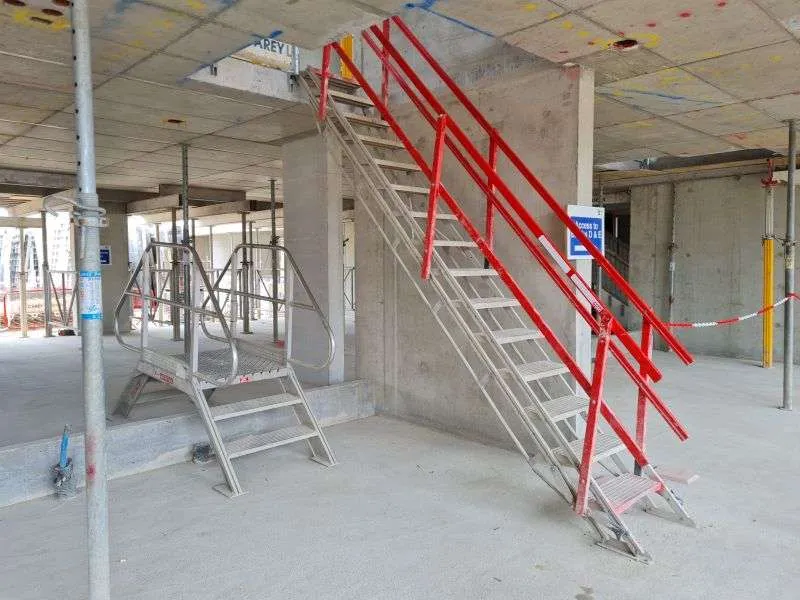
Adjustable temporary stairs are modular, reconfigurable stair systems designed for use during construction, renovation, or maintenance projects. Unlike permanent staircases, these units can be quickly installed, adjusted to fit varying elevations and angles, and relocated as the project progresses.
Key features of modern adjustable temporary stair systems include:
- Height and angle adjustability to accommodate different floor-to-floor elevations
- Self-leveling treads that maintain a consistent walking surface on uneven terrain
- Tool-free installation that allows two workers to set up a unit in under five minutes
- Lightweight yet durable materials like marine-grade aluminum for easy repositioning
- OSHA and Cal/OSHA compliance with built-in handrails and anti-slip treads
These systems are designed to replace dangerous alternatives like ladders and makeshift scaffolding, providing a stable, code-compliant means of access for workers, materials, and equipment.
California Regulations for Temporary Stairs
California has some of the strictest construction safety regulations in the nation. Understanding and complying with these requirements is essential for any contractor or project manager.
When Are Temporary Stairs Required?
Under California Code of Regulations (CCR) Title 8, Section 1629, temporary stairways must be installed in all buildings or structures two or more stories or 24 feet or more in height or depth. Additionally, stairways, ramps, or ladders must be provided at all points where a break in elevation of 18 inches or more occurs in a frequently traveled passageway, entry, or exit.
Minimum Width Requirements
Temporary stairways that will not be a permanent part of the structure must be at least 24 inches in width. For fixed stairways, the minimum usable width is 22 inches.
Angle and Rise/Tread Specifications
Stairs must be installed at angles between 30 and 50 degrees from horizontal. Riser height and tread depth must be uniform within each flight of stairs, with variations not exceeding 1/4-inch.
Handrails and Guardrails
Stairways with four or more risers or rising more than 30 inches must be equipped with:
- At least one handrail
- A stair rail with top rail and mid-rail along each unprotected side
Handrails and stair rails must be between 34 and 38 inches in height from the tread surface.
Landings
Temporary stairways must have landings at each floor or level, not less than 30 inches in the direction of travel and extending at least 24 inches in width at every 12 feet or less of vertical rise.
Load Capacity
Fixed stairways must be designed and constructed to carry a load of five times the normal live load anticipated, but never less than the strength to safely carry a moving concentrated load of 1,000 pounds.
Illumination
Sufficient illumination providing at least five foot-candles of light on the steps must be maintained on all stairways.
Why Choose Adjustable Temporary Stairs Over Ladders?
Ladder falls are one of the leading causes of workplace injuries and fatalities in construction. Adjustable temporary stairs offer a far safer alternative:
| Feature | Ladders | Adjustable Temporary Stairs |
|---|---|---|
| Stability | Prone to slipping and tipping | Self-leveling, stable platform |
| Load capacity | Limited | Designed for heavy loads and two-way traffic |
| Worker fatigue | High | Low—natural walking motion |
| Compliance | Limited use cases | Fully Cal/OSHA compliant |
| Productivity | Slow movement, single-file | Efficient, simultaneous two-way access |
For multi-story sites, adjustable temporary stairs eliminate the hazards of unstable access routes and dramatically improve crew productivity.
The GPS Fabrication Advantage
When it comes to adjustable temporary stairs construction CA, GPS Fabrication stands out as a trusted partner for contractors, developers, and project managers across the state.
Expertise in Steel Construction
With specialized expertise in steel construction, stairs, and railings, GPS Fabrication brings years of experience to every project. We understand that no two worksites are the same, and access requirements can vary widely based on layout, industry standards, and compliance regulations.
Code-Compliant Solutions
Our adjustable temporary stair systems are designed to meet or exceed all applicable California building codes and Cal/OSHA requirements. From minimum width specifications to handrail heights and load capacities, every detail is engineered for compliance.
Custom Fabrication
While off-the-shelf solutions exist, many California construction sites require custom-fabricated stair systems to address unique site conditions, elevation challenges, or space constraints. GPS Fabrication offers full customizability to meet unique access needs—whether you’re bridging complex entry points or complying with specific code requirements.
Quality Materials and Workmanship
We fabricate our temporary stair systems using high-quality materials that withstand the demanding conditions of California construction sites. Our pre-engineered steel stair systems meet the demands of all building codes, with calculations and drawings stamped by professional engineers licensed in California.
Applications for Adjustable Temporary Stairs in California
Adjustable temporary stairs are versatile solutions suitable for a wide range of applications across California’s diverse construction landscape:
Multi-Story Commercial Construction
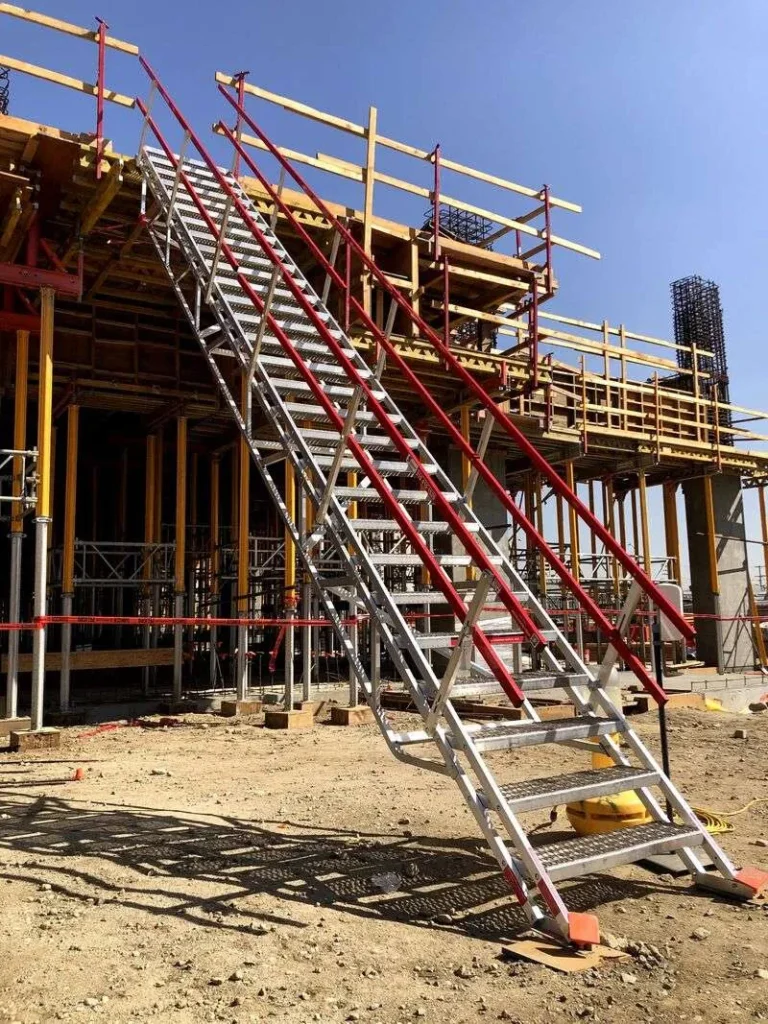
For buildings three stories or more, California law requires at least one stairway for access and exit; if more than three stories or 36 feet, two or more stairways must be provided. Adjustable temporary stairs provide the required safe access while permanent stairways are under construction.
Residential Development
From custom home builds to large-scale residential communities, temporary stairs ensure safe access between floors during framing, electrical, plumbing, and finishing work.
Infrastructure Projects
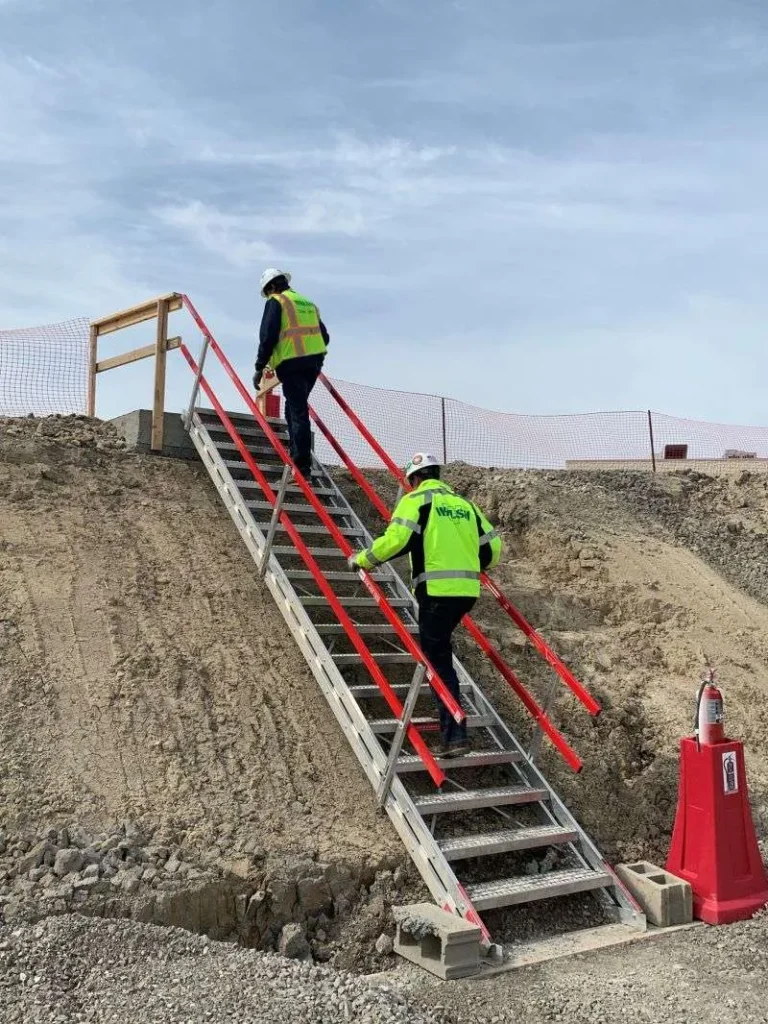
Bridges, tunnels, and other infrastructure projects often require access across uneven terrain, slopes, and excavations. Self-leveling adjustable stairs provide stable access in these challenging environments.
Industrial Facilities
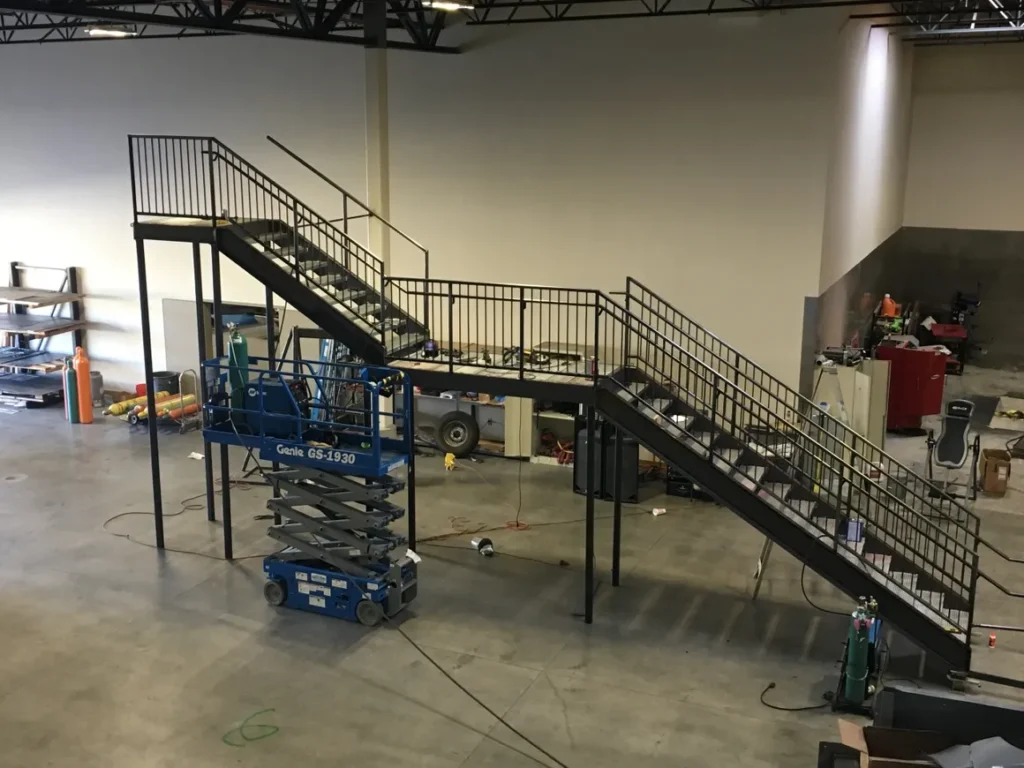
Manufacturing plants, warehouses, and industrial facilities often need temporary access solutions for maintenance, equipment installation, or facility upgrades.
Slab-to-Slab Access
On multi-story concrete or steel-frame buildings, adjustable temporary stairs provide fast, reusable floor-to-floor access that installs in minutes and self-levels to match slab elevations.
Excavation and Trench Access
Deep excavations and trenches require safe entry and egress points. Adjustable temporary stairs provide compliant access where ladders would be unsafe or impractical.
Frequently Asked Questions About Adjustable Temporary Stairs Construction CA
Q: Are adjustable temporary stairs required by law in California?
A: Yes. Under CCR Title 8, Section 1629, temporary stairways are required in all buildings or structures two or more stories or 24 feet or more in height or depth. Stairways, ramps, or ladders must also be provided wherever there is a break in elevation of 18 inches or more in frequently traveled areas.
Q: What is the minimum width for temporary stairs in California?
A: Temporary stairways that are not part of the permanent structure must be at least 24 inches wide.
Q: What angle should temporary stairs be installed at?
A: Stairs must be installed at angles between 30 and 50 degrees from horizontal.
Q: Do temporary stairs need handrails?
A: Yes. Stairways with four or more risers or rising more than 30 inches must have at least one handrail and a stair rail system on unprotected sides.
Q: How long does it take to install adjustable temporary stairs?
A: With modern systems like those fabricated by GPS Fabrication, two workers can install a unit in under five minutes with no tools required.
Q: Can adjustable temporary stairs be reused on different projects?
A: Yes. One of the key advantages of adjustable temporary stairs is their reusability. These systems can be disassembled, transported, and redeployed on multiple projects, offering significant cost savings over single-use alternatives.
Q: What is the load capacity for temporary stairs?
A: Fixed stairways must be designed to carry five times the normal live load anticipated, with a minimum capacity to safely carry a moving concentrated load of 1,000 pounds.
Q: Does GPS Fabrication serve the entire state of California?
A: Yes. GPS Fabrication provides adjustable temporary stair solutions for construction projects throughout California, with expertise in meeting the specific requirements of various city and county jurisdictions.
Choosing the Right Adjustable Temporary Stair System
When selecting an adjustable temporary stair system for your California construction project, consider the following factors:
1. Elevation Requirements
Determine the total height difference that needs to be spanned. Different systems offer varying adjustment ranges to accommodate different floor-to-floor elevations.
2. Site Conditions
Consider whether the stairs will be used indoors or outdoors, on level ground or uneven terrain, and in what weather conditions. Self-leveling treads are essential for uneven surfaces.
3. Traffic Volume
For high-traffic areas or sites where two-way traffic is expected, consider wider units—48-inch-wide versions support higher foot traffic and better crew flow.
4. Load Requirements
Evaluate the weight of workers, tools, and materials that will be using the stairs. Ensure the system you choose meets or exceeds your load requirements.
5. Duration of Use
Determine whether the stairs will be needed for days, weeks, or months. For long-term use, durability and weather resistance become more important considerations.
6. Compliance
Verify that any system you choose meets all applicable Cal/OSHA and California building code requirements.
Safety Best Practices for Temporary Stairs
Even with code-compliant adjustable temporary stairs, following safety best practices is essential:
- Inspect regularly for damage, wear, or loose components
- Keep stairs clear of debris, materials, and obstructions
- Ensure proper lighting—at least five foot-candles on the steps
- Maintain slip-resistant surfaces—eliminate slippery conditions before use
- Secure all connections—verify that the system is properly anchored at top and bottom
- Train workers on proper stair use and safety procedures
- Keep at least one stairway clear when multiple stairways are provided and work is being performed in others
Contact GPS Fabrication for Your Adjustable Temporary Stairs Needs
When your California construction project requires safe, compliant, and reliable access between levels, trust GPS Fabrication to deliver the adjustable temporary stair solution you need.
With our expertise in steel construction, stairs, and railings, we provide custom-fabricated systems designed to meet the unique demands of your project and the strict requirements of California regulations.
Contact GPS Fabrication today to discuss your adjustable temporary stairs construction CA needs. Let us help you keep your workers safe, your project compliant, and your timeline on track.